Powder coating can change the look of an alloy wheel and renew a tired finish, but the result depends far more on preparation and process control than on the colour selected. Here is what Costa Mesa drivers should expect before booking a wheel powder-coating job.
What wheel powder coating actually does
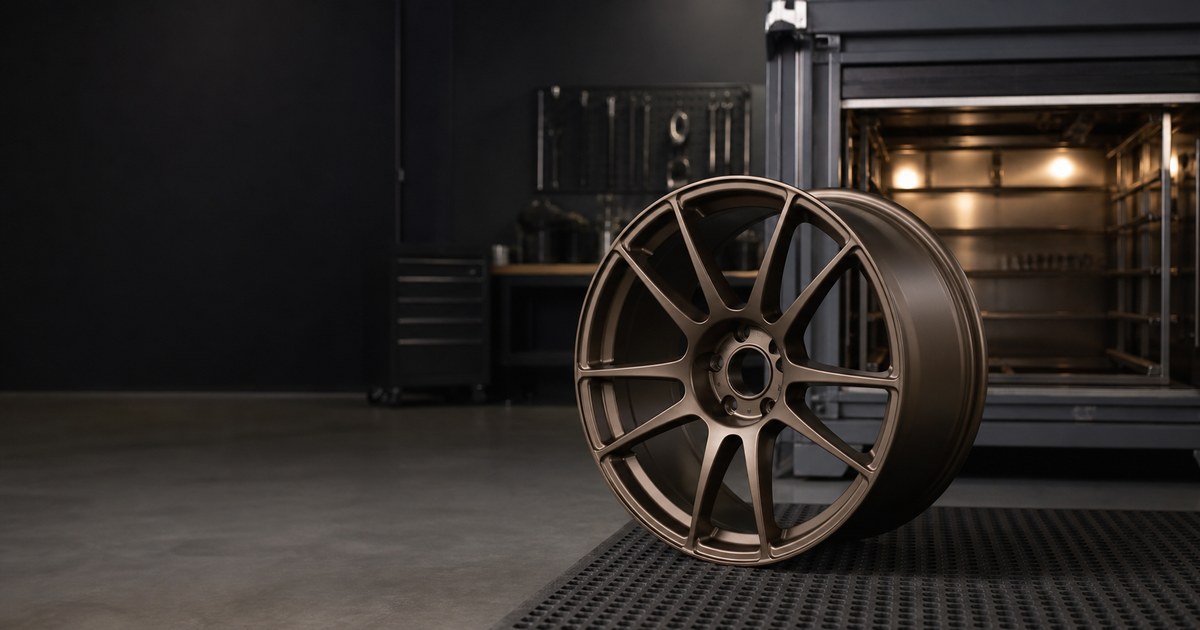
Wheel powder coating is a shop-based refinishing process. The existing finish is removed, the wheel is prepared, dry coating material is applied, and the finish is cured under controlled conditions. The goal is a continuous, even coating across the visible face, spokes and accessible barrel areas—not a quick spray over scratches.
That distinction matters because a wheel lives in a difficult environment. Brake dust, heat cycles, road debris, cleaners and moisture all test the bond between the coating and the metal. If the surface underneath is contaminated, oxidised or poorly prepared, an attractive finish can still fail early.
Powder coating is therefore not a mobile service. At Monaco Wheels, the work is completed at our Costa Mesa wheel-repair shop, where the preparation and curing equipment is located. Our Las Vegas mobile service handles suitable cosmetic wheel repairs and caliper work, but it does not perform powder coating.
When powder coating makes sense
Drivers usually choose powder coating for one of two reasons: to restore a finish that has deteriorated, or to change the look of the vehicle. It can be a sensible option when:
- The clear coat is peeling or cloudy. Once moisture reaches the aluminium beneath a failed finish, local touch-up may not provide a consistent result.
- Oxidation appears across several areas. A full refinish addresses the wheel as a complete surface rather than blending isolated spots.
- All four wheels need a colour change. Processing the set together helps keep colour and sheen consistent.
- Previous repairs are visible. Mismatched paint, hard blend lines or uneven texture may be better corrected through a complete refinish.
- The wheel is cosmetically sound but looks dated. A new finish can change the vehicle's appearance without replacing an otherwise serviceable wheel.
Powder coating does not make structural damage disappear. If a wheel is bent, cracked or has damage around a critical mounting or bead area, it must be inspected before refinishing. A finish decision comes after the safety decision.
The process, from inspection to final check
1. Inspect the wheel first
The technician needs to see more than the scraped face. The wheel should be checked for bends, cracks, previous repairs, corrosion and finish type. If the car has a vibration, mention it before the appointment; that may point to a wheel or tyre issue requiring diagnosis before cosmetic work begins.
A bent wheel may be a candidate for wheel straightening, but that assessment has to happen before coating. Applying a new finish first only creates extra work if the wheel later needs correction.
2. Remove the old finish and contamination
Good adhesion starts with a stable surface. Loose clear coat, failing paint, oxidation, embedded brake dust and residue cannot simply be sealed under a new layer. Preparation exposes the actual condition of the metal and gives the new coating a suitable surface.
This is also the stage when hidden damage may become easier to identify. A shop should not promise a final cosmetic result until the wheel has been inspected and the old failing material is no longer masking the substrate.
3. Correct cosmetic damage
Curb rash and gouges should be repaired before the colour coat. The objective is to restore the wheel's profile so the final coating follows a clean, consistent shape. Coating over a damaged edge may change its colour, but it will not correct the contour.
For more detail on how damaged aluminium is prepared and reshaped, see our guide to curb-rash repair and our alloy-wheel repair service.
4. Apply and cure the coating
The coating is applied in a controlled shop environment and then cured using dedicated equipment. The Occupational Safety and Health Administration's rules for spray-finishing operations specifically address powder-coating ventilation and drying or curing equipment, which illustrates why this is an equipment-dependent process rather than a driveway touch-up.
Colour is only one specification. Sheen—gloss, satin or matte—changes how the same colour reads in sunlight and shade. Before work begins, confirm the exact finish and whether centre caps or other visible components will match.
5. Inspect the completed wheel as a set
A finished wheel should be checked for uniform colour, coverage and texture. When coating four wheels, compare them together under the same light. When coating a single wheel, understand that matching an aged factory finish can be more difficult than refinishing a complete set.
Choosing a finish without guessing
Online photos are useful for direction, but screens distort colour and gloss. A satin black wheel can look nearly matte in one photo and glossy in another. The vehicle colour, tyre sidewall, brake hardware and the shape of the spokes all affect the final appearance.
- Gloss finishes reflect more light and make contours pronounced, but dirt and fine marks can be easier to notice.
- Satin finishes sit between gloss and matte and are often selected when the owner wants definition without a mirror-like surface.
- Matte finishes create a flatter appearance and require care with cleaners and future touch-ups because sheen differences can be visible.
- Bronze and gunmetal tones can vary substantially by formulation and lighting, so confirm the actual selection rather than relying only on a colour name.
If the vehicle also has visible calipers, consider the relationship between wheel colour and caliper paint before approving both. Coordinating the choices is easier than correcting a combination that competes once installed.
Questions to ask before booking
A useful quote should be based on the wheel's condition, finish and quantity—not just diameter. Before approving the job, ask:
- Will the wheels be inspected for bends, cracks and previous repairs?
- How will the old finish and corrosion be addressed?
- Is curb rash correction included before coating?
- What exact colour and sheen are being approved?
- Are tyres, centre caps or accessories handled separately?
- What turnaround applies to this specific set?
- What care instructions apply after collection?
Turnaround depends on the number of wheels, their condition, the selected finish and any repair required first. Monaco Wheels confirms timing after reviewing the job rather than using one promise for every wheel.
Environmental and safety context
The U.S. Environmental Protection Agency lists powder coatings as an example of low- or no-VOC coating technology. That does not eliminate the need for professional controls: surface preparation, application, ventilation and curing all still need suitable equipment and safe procedures.
For customers, the practical point is simple: evaluate the complete process, not just the colour sample. Preparation and controlled curing are the foundation of the finish.
Get the wheel assessed in Costa Mesa
Monaco Wheels & Auto Restyling provides wheel powder coating by appointment at 1560 Superior Ave STE B3, Costa Mesa, CA 92627. To start, text a clear daylight photo of each wheel to (949) 800-8502. Include the vehicle, wheel size, number of wheels, current damage and the finish you are considering.
You can also review the dedicated wheel powder-coating service and examples in our gallery before choosing a direction.
Sources and further reading
- OSHA Standard 1910.107: Spray finishing using flammable and combustible materials
- U.S. EPA: Low/no-VOC coating technologies
Common questions
Is wheel powder coating available as a mobile service?
No. Monaco Wheels performs powder coating at the Costa Mesa shop because surface preparation and controlled curing require dedicated shop equipment.
Can a bent wheel be powder coated?
The wheel should be inspected first. If the bend is repairable, straightening is addressed before refinishing so the completed coating is not disturbed by later structural correction.
How long does wheel powder coating take?
Timing depends on wheel condition, quantity, required repairs and the selected finish. Monaco Wheels confirms the turnaround after inspecting the wheels rather than applying one timeline to every job.
Can you powder coat over the existing finish?
A durable result requires proper preparation. Loose coating, oxidation, contamination and damaged areas must be addressed rather than hidden beneath a new layer.
What information should I send for a quote?
Text clear daylight photos, the vehicle make and model, wheel size, number of wheels, visible damage and the colour or sheen you are considering to (949) 800-8502.
Text us a photo of the wheel
We quote from photos every day. Straight-on, in daylight, and you will have a real number back — no trip required.
Get a price for your wheels
Tell us what happened to the wheel. We reply with a real number, not a "starting from".
Request received.
We will come back to you shortly. For anything urgent, call (949) 800-8502.Prefer to text a photo? (949) 800-8502