Accurate wheel paint matching in Orange County is not a matter of selecting a generic silver from a shelf. A credible match considers the wheel's existing colour, metallic behaviour, gloss and surface texture, then accounts for what the damaged area and refinishing method can realistically hide.
Why a wheel colour is rarely just silver
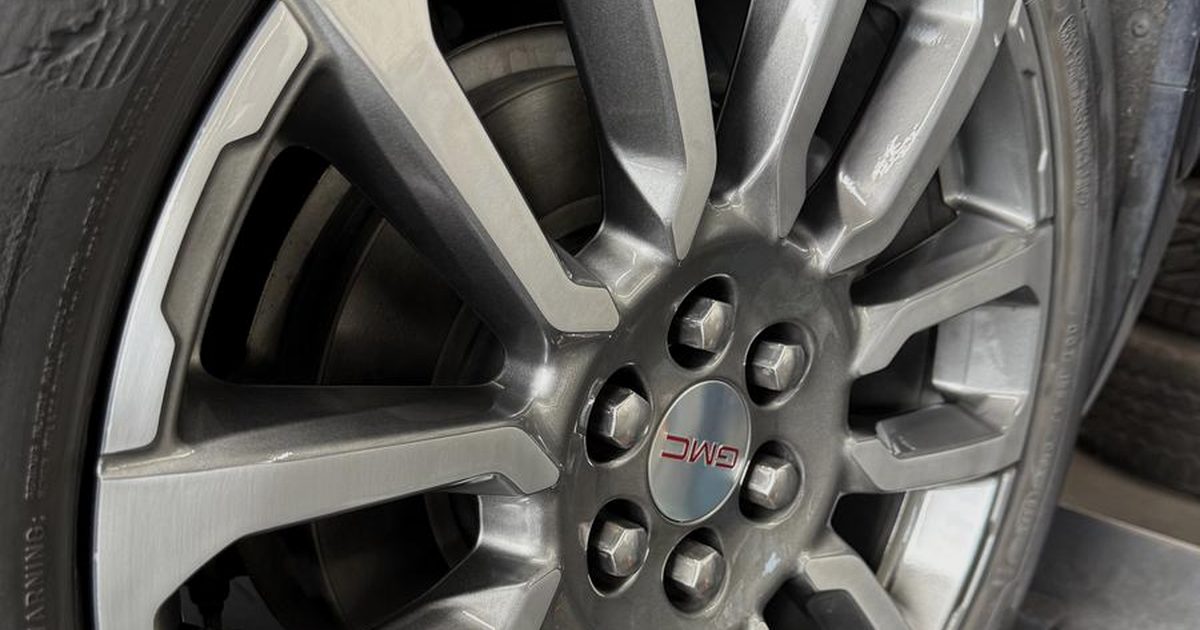
Most factory alloy wheels sit somewhere between bright silver, charcoal, graphite, black and bronze, but those broad labels are not paint matches. Two wheels described as silver can use different base tones, metallic particle sizes and clearcoat finishes. One may lean blue in daylight while another looks warmer. One may appear bright when viewed directly and noticeably darker when viewed from an angle. That change is known as metallic flop, and it is one reason a colour that looks correct on a mixing card can still look wrong on the wheel.
The existing finish also changes over time. Heat, road contamination, cleaning products, brake dust and previous repairs can alter how the surface reflects light. Even wheels from the same vehicle may not look identical if one has been refinished before. Good alloy wheel repair and refinishing therefore begins with the actual wheel, not merely the vehicle's year, model or a colour name supplied over the phone.
How the colour is chosen
Matching is a sequence of decisions. The technician is not only looking for the nearest pigment formula; the aim is to make the repaired area sit naturally beside the finish that remains.
1. Inspect the wheel before choosing paint
The first question is what kind of finish is present. A conventional painted wheel can often be repaired differently from a machined face, polished surface or powder-coated wheel. The technician also checks whether the visible difference is truly colour. Embedded brake dust, oxidation, faded clearcoat or a change in surface texture can make a correct colour appear too light or too dark. Cleaning and inspecting the wheel under useful lighting prevents contamination from becoming the reference.
2. Establish the colour family and undertone
Once the finish is identified, the colour is narrowed beyond broad terms such as silver or gunmetal. The technician considers whether the base is neutral, warm, blue, green or brown, then looks at the metallic content. Fine metallic particles produce a different face than coarse particles, even when the base colour is close. The amount and orientation of those particles affect brightness at different viewing angles, so a stationary head-on comparison is not enough.
3. Compare a sample in more than one light
Paint can agree under one lamp and separate under daylight. This effect, called metamerism, occurs when two colours have similar appearances under one light source but respond differently under another. A useful comparison moves the wheel or sample through direct and indirect light and views it both straight on and from the side. Orange County sun is revealing, but shaded light matters too because that is where small undertone differences often become easier to see.
4. Adjust application, not only the formula
The same mixed paint can produce different results depending on how it is applied. Film thickness, spray distance, overlap and the final orientation coat can influence how metallic particles settle. That changes the apparent brightness and flop without changing the pigment formula. A technician therefore judges the sprayed result rather than assuming the mixture alone determines the match. This is also why a small dab of liquid paint is a poor predictor of the finished wheel.
5. Decide where the transition should occur
A close colour can still leave a visible edge if it ends abruptly in the middle of an open spoke. Where the wheel design and damage allow it, the transition can be placed at a contour, spoke edge or other natural break. Some repairs call for a controlled blend into the surrounding finish; others are better served by refinishing the complete face. The correct choice depends on the wheel's geometry, the colour and the location of the damage, not on a blanket promise that every mark can be invisibly spotted in.
Gloss and texture are part of the match
Colour receives most of the attention, but gloss can make two identical colours look unrelated. A high-gloss clearcoat creates sharper reflections and greater apparent depth. Satin and matte finishes scatter light, which can make the same base colour look lighter or flatter. If the gloss level is wrong, adding more pigment will not solve the problem. The clearcoat system and its final appearance have to suit the existing wheel.
Texture matters for the same reason. Factory finishes may be smooth, lightly textured or deliberately low-gloss. Previous repair material, sanding marks or uneven preparation can interrupt reflections and reveal the repair even when the hue is close. With curb rash repair, the damaged area must first be brought back to a stable, correctly shaped surface. Paint cannot disguise a low spot, a hard filler edge or a different texture once light moves across the spoke.
What a wheel photo can and cannot show
A clear photograph is useful for triage. It can usually show the damage location, approximate size, wheel design and whether the face appears painted, polished or machined. It also helps distinguish ordinary cosmetic damage from a job that may need a different shop process. For the most useful first assessment, include:
- the complete wheel photographed straight on;
- a close view of the damaged area;
- an angled view showing the surface finish;
- natural light without a flash or colour filter;
- the tyre and rim edge, not only the scratch; and
- another wheel from the vehicle when colour variation is a concern.
A photo cannot provide an exact paint formula. Phone cameras alter white balance, exposure, contrast and sharpening, while screens reproduce colour differently. Reflections from the sky, bodywork or workshop lighting can also make metallic paint look warmer, darker or more blue than it is. A photograph supports a preliminary conversation; final colour, gloss and texture decisions require the wheel itself. Anyone promising a perfect match from one compressed image is ignoring those limits.
When a local repair is reasonable
A localised cosmetic repair is most plausible when the damage is confined, the surrounding finish is stable and the wheel design provides a sensible place for the transition. Conventional painted finishes are generally more accommodating than complex translucent colours, matte surfaces or highly directional metallics. The objective is not to disturb sound finish without reason, but preserving it only makes sense when the repair boundary will remain visually controlled.
A complete face refinish may be the more honest recommendation when damage crosses several spokes, the clearcoat is failing, previous repairs have created multiple shades or the colour cannot be transitioned cleanly. If every wheel has aged differently, matching one freshly refinished wheel to the other three can also require compromise. Matching means choosing the least visible and most durable approach available; it does not mean pretending that an altered finish can always be recreated exactly.
Some finishes need a different process
A bright machined face is not created with silver paint. Its visible lines are cut into the wheel face and then protected, so proper diamond-cut wheel repair requires a lathe at the Costa Mesa shop. Likewise, a bent wheel needs measurement and a press through wheel straightening; paint matching cannot correct a structural shape problem. Monaco declines to weld cracks in structural areas and recommends replacement instead. We would rather lose the job than put that on the road.
Powder coating also differs from a small wet-paint repair because the wheel is coated and cured as a complete component. It can be suitable when changing colour or renewing an entire finish, but it should not be presented as an exact spot-match method. Polished wheels introduce another surface entirely, and may belong under wheel polishing and restoration rather than ordinary paint repair.
Where the work is assessed
Orange County refinishing is handled by appointment at the Costa Mesa shop at 1560 Superior Ave. STE B3. Shop-only processes include coating, straightening and machined-face work because they require an oven, press or lathe. The Costa Mesa wheel repair page explains the local setup. Monaco also operates a mobile unit in Las Vegas, but that service is limited to cosmetic wheel repair and caliper painting; there is no Las Vegas shop.
What affects the quote
The quote depends on the damage, wheel construction, finish type, repair area and whether the job requires a local blend, complete face refinish or specialist shop equipment. Monaco provides a quote after reviewing the wheel and required finish. The wheel repair cost guide explains the factors without promising a price before the wheel has been assessed.
For an initial assessment, text a clear photo of the complete wheel and a close view of the damage to (949) 800-8502. Include your location and ask which refinishing approach makes sense for the finish in front of you.
Common questions
Can you match my wheel paint exactly from a photo?
No. A clear photo can identify the likely finish and repair category, but camera processing, lighting and screen differences prevent an exact colour, gloss or metallic assessment. The final match must be judged from the physical wheel.
Does a vehicle paint code identify the wheel colour?
Not necessarily. Wheel finishes may not correspond to the vehicle body paint code, and previous refinishing or ageing can change the visible result. The existing wheel remains the practical reference.
Do all four wheels need to be refinished?
Not automatically. A single wheel may be repairable when its finish can be matched convincingly. Refinishing more than one wheel may be considered when the existing wheels vary substantially, but that decision requires inspection.
Can a machined or diamond-cut wheel be matched with silver paint?
Silver paint can imitate the general brightness but cannot reproduce the cut lines of a machined face. Correct diamond-cut work requires a lathe and is performed at the Costa Mesa shop.
Can Monaco quote wheel paint matching before an appointment?
A clear photo can support an initial assessment and identify likely cost factors, but it is not a final colour reference. Orange County shop work is by appointment only; text the complete wheel and close-up photos to (949) 800-8502.
Text us a photo of the wheel
Send a daylight photo for an initial assessment. Repair options and final pricing are confirmed after inspection.
Get a price for your wheels
Tell us about the damage and your location. We will explain repair options and confirm pricing after assessment.
We could not send your request. Please try again, or call (949) 800-8502.
Request received.
We will come back to you shortly. For anything urgent, call (949) 800-8502.Prefer to text a photo? (949) 800-8502