An OC wheel repair decision should start by separating the finish from the wheel beneath it. Scraped paint, failed clear coat and surface corrosion may justify refinishing, while a crack in a structural area can make replacement the responsible recommendation. Bent wheels and machined faces sit between those outcomes because they require the right equipment and a closer inspection. This guide focuses on that boundary: what refinishing can correct, what it cannot change and why the appearance of the front face never tells the whole story.
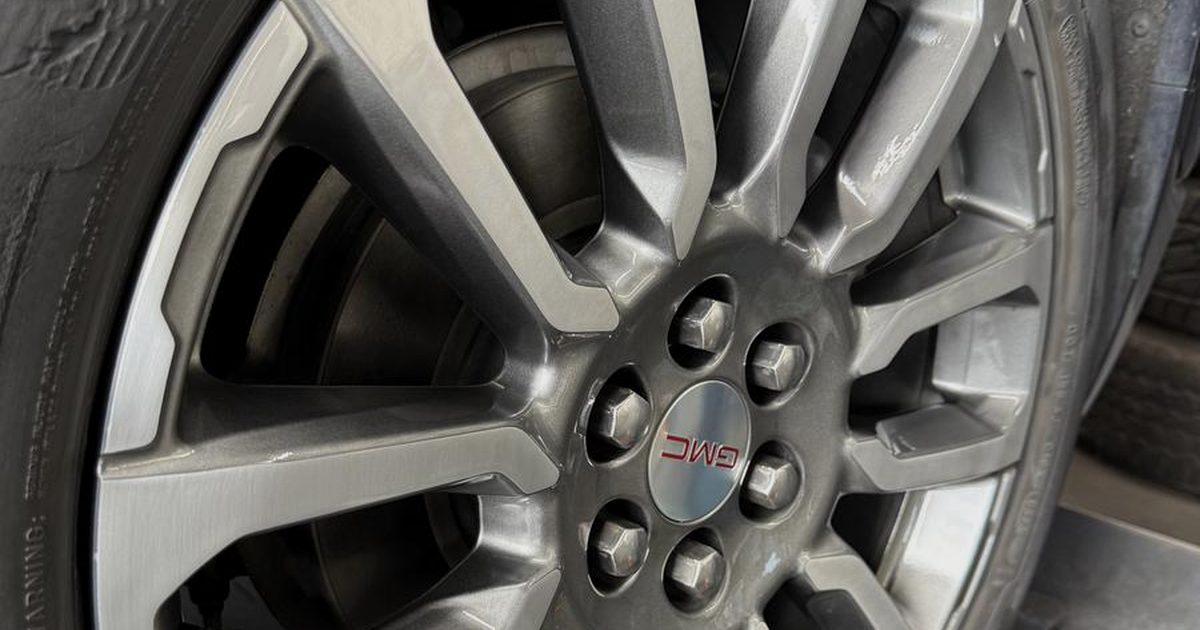
Refinishing and replacement solve different problems
Refinishing restores the surface system applied over the aluminium. Depending on the original wheel, that system may include primer, colour, clear coat, powder coating or a machined face protected by clear coat. The work can remove curb rash, oxidation and finish failure before rebuilding the visible surface. It does not automatically correct a bend, remove a crack or prove that the wheel is structurally sound.
Replacement changes the wheel itself. It becomes the sensible direction when the underlying structure is not a repair candidate, when previous work has removed too much material, or when restoring the wheel would leave an unacceptable result. That distinction is central to an honest alloy wheel repair assessment: first decide whether the wheel remains suitable to work on, then decide which finish process belongs on it.
Use a two-stage decision, not a glance at the face
A wheel can look badly scraped yet remain a straightforward refinishing candidate. Another wheel may have a nearly clean face while damage sits on the inner barrel. Before choosing a process, the inspection should answer two separate questions:
- Is the substrate a repair candidate? Check the spokes, barrel, bead area, mounting pad and lug holes rather than judging only the visible face.
- Is the wheel running as it should? Vibration, an impact or visible deformation may call for a runout check and possible wheel straightening assessment.
- What finish is actually present? Painted, powder-coated, polished and diamond-cut wheels require different preparation and equipment. A similar silver colour does not mean an identical finish.
- Can the original profile be retained? Deep gouges, earlier sanding and previous machining matter because refinishing should not keep removing material simply to make damage disappear.
This sequence prevents a cosmetic solution from being used as a structural answer. It also avoids replacing a sound wheel merely because its clear coat or colour has deteriorated.
When refinishing is usually the relevant option
Refinishing belongs in the conversation when the concern is confined to the surface and the underlying wheel passes inspection. Monaco cuts damaged finish back to a stable edge and clean material rather than hiding loose coating beneath a new top layer. The exact process then follows the wheel's construction and existing finish.
- Curb rash and edge scrapes may suit curb rash repair when they have not exposed a separate structural problem.
- Peeling clear coat, discolouration and widespread finish failure may justify refinishing the full face rather than blending one small section.
- A painted wheel can be prepared, colour matched and cleared when its original finish can be reproduced responsibly.
- A wheel needing a complete coating change may be evaluated for powder coating at the Costa Mesa shop.
Refinishing is not defined by how dramatic the damage looks in a photograph. A long shallow scrape may remain cosmetic, while a short mark beside a distorted rim can point to a different problem. Photos are useful for an initial discussion, but access to the whole wheel may change the recommendation.
When replacement becomes the safer recommendation
A visible crack changes the priority. Do not continue driving on the wheel. Arrange safe transport and have it professionally assessed. Monaco declines to weld cracks in structural areas and recommends replacement instead. We would rather lose the job than put that on the road.
- Cracking through a spoke, near a lug hole or in another structural area points away from cosmetic refinishing.
- Severe deformation may make the wheel unsuitable for straightening, even though less serious bends can be assessed at the shop.
- Missing metal or a deeply altered rim profile can prevent a responsible restoration of the original shape.
- Repeated or undocumented previous work may leave too little certainty about what remains beneath the current coating.
Replacement must still be approached carefully. The substitute should match the required diameter, width, offset, mounting pattern and vehicle specification. A wheel that merely looks similar is not necessarily an appropriate replacement. When sourcing a used wheel, its own bends, cracks, prior repairs and finish history should also be inspected.
The important middle cases
Not every wheel falls neatly into a refinish-or-replace box. Some need a separate repair before the finish is addressed. That is why Monaco treats straightening, coating and machining as distinct operations rather than calling every job a refinish.
A bent wheel with cosmetic damage
If an impact has bent the rim and scraped the face, painting the scrape first would solve the least important part of the problem. The bend must be assessed before finish work begins. Monaco performs straightening at the Costa Mesa shop because the work requires a press. If the wheel is accepted for straightening, refinishing can then address the cosmetic damage without disguising the original issue.
A diamond-cut or machined face
A machined wheel has fine lines cut into its face, usually beneath clear coat. Reproducing that appearance requires a lathe, so Monaco handles diamond-cut wheel repair in Costa Mesa. There is no universal safe number of re-cuts. The remaining profile, existing damage and evidence of earlier machining must be inspected each time. If another cut would remove too much material or compromise the design, replacement or a different finish direction may be recommended.
Finish matching can affect the decision
A structurally acceptable wheel can still present a practical finish question. Factory silvers vary in tone, metallic content and gloss. Machined wheels combine a cut surface with painted pockets, while some replacement wheels arrive with a finish that differs from the other three. The goal is not to call every variation an exact match before the wheel is seen; it is to identify the finish correctly and explain what can reasonably be reproduced.
Sometimes refinishing one wheel is the most direct route. In other cases, the condition of the remaining wheels makes a broader finish plan worth discussing. That is an appearance decision, not proof that all four wheels require repair. Monaco can compare the damaged wheel with the others and frame the options without inventing a fixed package or promising an unseen colour match.
What determines the quote
Monaco does not publish a single price for every wheel because the visible scrape is only one quote factor. The extent and location of damage, wheel size, finish type, colour-matching work, prior repairs and the need for straightening, coating or machining all affect the process. The wheel repair cost guide explains these factors without assigning a made-up price band.
A clear photograph should show the full face, not just a close-up of the worst mark. Include another angle if the lip or barrel is affected, and mention vibration, air loss, an impact or previous repair. Those details help Monaco identify whether the request appears cosmetic or needs an in-shop inspection. A photograph is an initial quoting tool, not a substitute for examining a suspected crack or bend.
Where Orange County work is handled
Orange County appointments are handled at the Costa Mesa shop, 1560 Superior Ave. STE B3, Costa Mesa, CA 92627. The shop is by appointment only. Straightening, powder coating and diamond-cut work stay there because they require a press, curing oven and lathe respectively. Monaco's Las Vegas unit is a separate mobile service limited to cosmetic wheel repair and caliper work; those limits describe Monaco's equipment and operating model, not every mobile operator.
If you are deciding between refinishing and replacement, start with the condition rather than the desired finish. A sound wheel with surface damage may have a clear refinishing path. A structural crack deserves a stop-driving recommendation, safe transport and professional assessment. The uncertain cases need inspection, not optimistic sanding or a cosmetic cover-up.
For an initial OC wheel repair assessment, text a clear wheel photo to (949) 800-8502. Include the vehicle, the affected area and whether you noticed an impact, vibration, air loss or earlier repair.
Related repair guides
Common questions
How can I tell whether my wheel needs refinishing or replacement?
Start by separating surface damage from structural damage. Scrapes, peeling clear coat and colour failure may be refinishable if the wheel passes inspection. A visible crack, severe deformation, missing material or an unsafe structural condition can lead to a replacement recommendation.
Does curb rash mean an alloy wheel must be replaced?
Not by itself. Curb rash is often a finish and edge-repair issue, but the full wheel still needs to be considered. Damage near a distorted rim, crack or previously altered area can change the recommendation.
Can Monaco refinish a bent wheel?
A bend must be assessed before cosmetic refinishing. Monaco performs wheel straightening at the Costa Mesa shop because it requires a press. If the wheel is accepted for straightening, the appropriate finish work can be evaluated afterward.
How many times can a diamond-cut wheel be refinished?
There is no universal safe number of re-cuts. Each assessment depends on the remaining face profile, depth of damage and evidence of previous machining. Monaco may recommend another finish direction or replacement when a further cut is not responsible.
Where does Monaco perform OC wheel repair?
Orange County work is handled by appointment at 1560 Superior Ave. STE B3 in Costa Mesa. Straightening, powder coating and diamond-cut work are shop services because they require a press, oven and lathe.
Text us a photo of the wheel
Send a daylight photo for an initial assessment. Repair options and final pricing are confirmed after inspection.
Get a price for your wheels
Tell us about the damage and your location. We will explain repair options and confirm pricing after assessment.
We could not send your request. Please try again, or call (949) 800-8502.
Request received.
Your enquiry is awaiting follow-up during business hours. This does not confirm an appointment; please wait for us to confirm availability before visiting. To speak with us, call (949) 800-8502.Prefer to text a photo? (949) 800-8502