A bent wheel can announce itself through vibration, air loss or uneven tyre wear. This guide explains when bent rim repair in Orange County may call for a press, and when a damaged wheel should not be put back on the road.
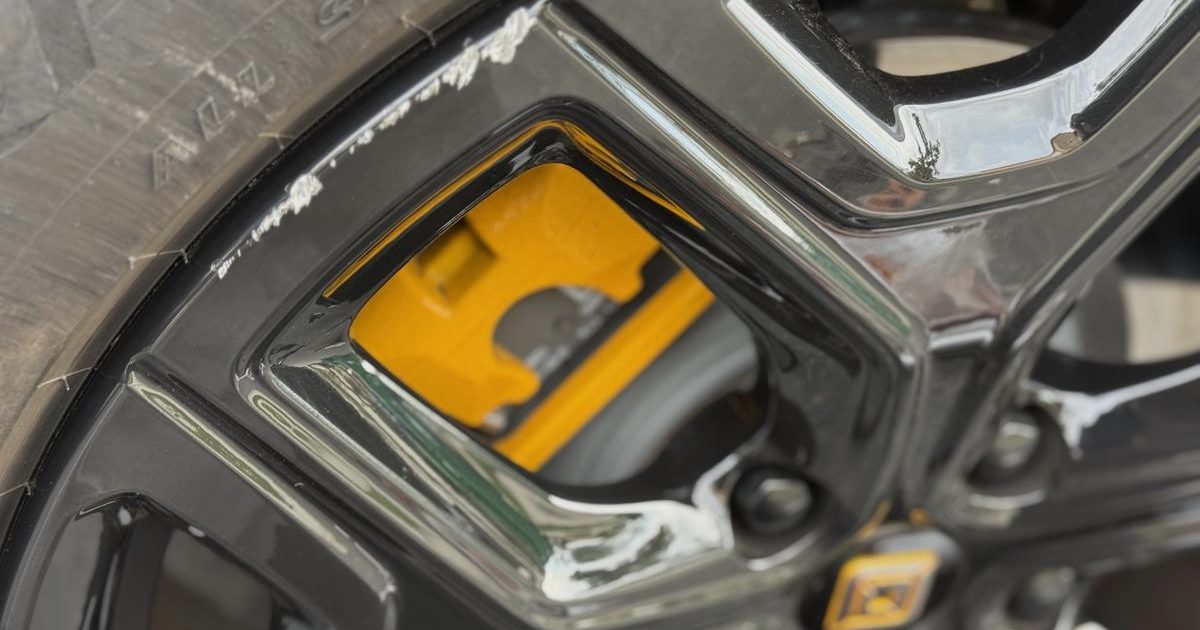
A wheel does not need to look dramatically damaged to affect how a car drives. A small impact with a pothole, kerb or road edge can move the rim out of round, disturb the bead seal or create a flat spot in the metal. Sometimes the only early sign is a vibration that appears at one speed and disappears at another.
The useful question is not simply whether a rim is bent. It is whether the wheel can be safely and accurately returned to shape. That depends on where the damage is, how far the metal has moved, whether the wheel has cracked, and whether the tyre or suspension has also been affected. A press is a tool for controlled correction, not a solution for every damaged wheel.
Signs your wheel may need a press
These symptoms do not prove that the rim is bent, but they are good reasons to stop guessing and have the wheel inspected. A tyre problem, alignment issue or worn suspension component can create similar behaviour.
- Vibration at a particular speed. A steering-wheel shake often points to a problem at the front, while a vibration through the seat or floor can come from the rear. Wheel imbalance, tyre damage and bent rims can all feel similar.
- New air loss after an impact. A bent bead seat may prevent the tyre from sealing properly against the rim. A puncture, damaged valve or tyre sidewall can also be responsible, so the leak needs to be located rather than assumed.
- A visible flat spot or uneven rim edge. With the wheel off the car, distortion may be easier to see from the rear or along the bead area. Do not rely on a quick look from the outside of the vehicle.
- Uneven or unusual tyre wear. A wheel that is no longer running true can contribute to irregular wear. Alignment should still be checked because a hard impact can move suspension parts as well as the wheel.
- A change after a pothole or kerb strike. If the vehicle drove normally before one impact and began vibrating or losing pressure afterwards, the timing is meaningful even when the damage is not obvious.
If the steering becomes difficult, the vibration is severe, the tyre is visibly damaged, or the wheel loses pressure quickly, avoid continuing to drive on it. Fit the spare if appropriate for the vehicle, or arrange safe transport for an inspection. A wheel that is merely inconvenient is different from a wheel that cannot reliably hold the tyre or carry road loads.
What a wheel press actually does
A press applies controlled force to a selected part of the wheel so the technician can correct excessive radial or lateral runout. Radial runout is an up-and-down change as the wheel rotates. Lateral runout is a side-to-side wobble. The distinction matters because the correction has to follow the shape of the damage rather than simply pushing at the most visible point.
Before any correction, the wheel should be inspected for cracks, severe distortion, damage around the bead seat and signs of metal fatigue. Measurement is more useful than appearance alone. A rim can look acceptable when parked and still show a measurable wobble once it is rotated and checked properly.
Controlled pressure is important with alloy wheels. Too much force, pressure in the wrong place or repeated overworking can create a new weak area. The aim is not to make the wheel look straight for a moment. The aim is to determine whether the wheel can be brought back within a usable shape without concealing a structural problem.
That is why wheel straightening is different from cosmetic alloy wheel repair. Refinishing can improve the appearance of scratches, oxidation or curb rash, but paint cannot correct runout and filler cannot restore the structure of a bent wheel.
When a press is not the right answer
Some damage should lead to a replacement recommendation rather than an attempt to save the wheel. A crack in a structural area, a badly torn bead seat, extensive corrosion or severe deformation can make pressing the wheel a poor risk. A wheel may also have been straightened before and then damaged again. The history and condition matter.
Monaco declines to weld cracks in structural areas and recommends replacement instead. That is not a limitation to hide. It is the boundary between a repair that addresses a manageable bend and a repair that asks damaged metal to carry loads it may no longer be able to carry safely. We would rather lose the job than put that on the road.
Do not confuse a cosmetic mark with structural damage. Curb rash repair deals with scraped or gouged finish around the outer lip when the wheel remains structurally suitable. A wheel can have both curb rash and a bend, but the visual damage does not tell you whether a press is needed.
Machined or diamond-cut wheels also need a separate decision. If the face has been damaged, the correction may involve specialist machining after the wheel itself has been assessed. Diamond-cut wheel repair is not the same operation as straightening, and a lathe is required for the machined face work.
How the inspection and repair decision works
1. Start with the symptom and impact
Note when the vibration occurs, whether the car pulls, how quickly pressure changes, and which wheel was near the impact. If possible, provide a clear photograph of the wheel and explain whether the tyre is holding air. A photo cannot measure runout, but it helps identify obvious distortion and determine the next step.
2. Separate wheel damage from related problems
The tyre, valve, balance, alignment and suspension should not be overlooked. A bent rim repair may solve the vibration only when the wheel is the actual source. If the tyre has a bulge or the suspension is damaged, the vehicle needs those issues addressed as well.
3. Measure before pressing
The wheel should be checked for the direction and extent of runout, then inspected for cracks and damage around the bead. This is where an experienced technician decides whether controlled straightening is sensible or whether replacement is the safer path.
4. Recheck the wheel after correction
After any correction, the wheel needs another inspection. The goal is not an attractive before-and-after photograph. It is a wheel that has been evaluated honestly and is appropriate to return to service. If the underlying metal remains compromised, no finish can change that conclusion.
Where Orange County wheel straightening takes place
For Orange County drivers, Monaco performs straightening at its Costa Mesa shop because the work requires equipment that cannot be carried in a mobile unit. The shop is at 1560 Superior Ave. STE B3, Costa Mesa, and Orange County service is by appointment only. A press is needed for straightening, just as an oven is needed for powder coating and a lathe is needed for machined faces.
The broader Orange County wheel repair service covers the shop-based work available through Costa Mesa. Las Vegas works differently: Monaco's Las Vegas unit is mobile only and handles cosmetic wheel repair and caliper painting at a home, hotel or office. It does not perform wheel straightening, powder coating or diamond-cut machining on site because the required shop equipment is not in the van.
What affects the cost of bent rim repair?
There is no responsible universal price for a bent wheel before it has been inspected. The cost depends on the wheel's size and construction, the location and severity of the bend, whether the tyre must be removed, whether the wheel has cracks or corrosion, and whether cosmetic refinishing is also required.
One wheel with a straightforward cosmetic issue is a different job from a wheel that needs structural assessment, straightening and refinishing. If several wheels were damaged in the same incident, the inspection may also identify tyre, alignment or suspension work that should be handled separately. Monaco publishes cost factors rather than invented figures; the wheel repair cost guide explains why a photograph and a clear description are useful before quoting.
The sensible first step is to send the wheel details rather than authorise a repair based on a guess. Include the vehicle, the wheel's location if known, the symptom, the date of the impact and whether the tyre is holding air. That gives the shop enough context to tell you whether the next step is an inspection, a cosmetic repair, straightening or replacement.
Do not let appearance make the safety decision
A bent rim can be subtle, and a wheel can also look severe while remaining cosmetically repairable. Neither conclusion should be made from a single photograph or from the fact that the car still drives. Check the symptom, inspect the tyre, measure the wheel and make the repair decision around the condition of the metal.
If the wheel is structurally suitable, controlled straightening may restore its usable shape. If it is cracked in a structural area or too heavily damaged, replacement is the honest answer. Text a clear photo of the wheel to (949) 800-8502, include what happened and whether it is losing air, and Monaco can advise on the appropriate next step.
Common questions
How do I know if my rim is bent?
Common signs include vibration at a particular speed, air loss after a pothole or kerb strike, a visible flat spot, and irregular tyre wear. These symptoms can also come from a tyre, balance, alignment or suspension problem, so the wheel needs an inspection rather than a guess.
Can every bent alloy wheel be straightened?
No. A press may be appropriate for a manageable bend when the wheel is otherwise structurally sound. Cracks in structural areas, severe deformation, damaged bead seats, extensive corrosion or previous damage may make replacement safer. Monaco does not weld cracks in structural areas.
Does a bent rim always need to be replaced?
No. Replacement is not automatically required for every bend, but the decision depends on the wheel's condition and measurements. A technician should check for cracks, runout, bead-seat damage and metal fatigue before recommending straightening or replacement.
Can a mobile technician straighten a bent rim in Orange County?
Wheel straightening requires a shop press, so Monaco performs this work at its Costa Mesa shop by appointment. Monaco's Las Vegas service is mobile only and handles cosmetic wheel repair and caliper painting, not straightening.
How should I request a bent rim repair assessment?
Text a clear photo of the wheel to (949) 800-8502 and describe the impact, vibration, air loss and vehicle. A photo cannot replace measurement, but it helps determine whether the next step is a shop inspection, cosmetic repair, straightening or a replacement recommendation.
Text us a photo of the wheel
Send a daylight photo for an initial assessment. Repair options and final pricing are confirmed after inspection.
Get a price for your wheels
Tell us about the damage and your location. We will explain repair options and confirm pricing after assessment.
We could not send your request. Please try again, or call (949) 800-8502.
Request received.
We will come back to you shortly. For anything urgent, call (949) 800-8502.Prefer to text a photo? (949) 800-8502