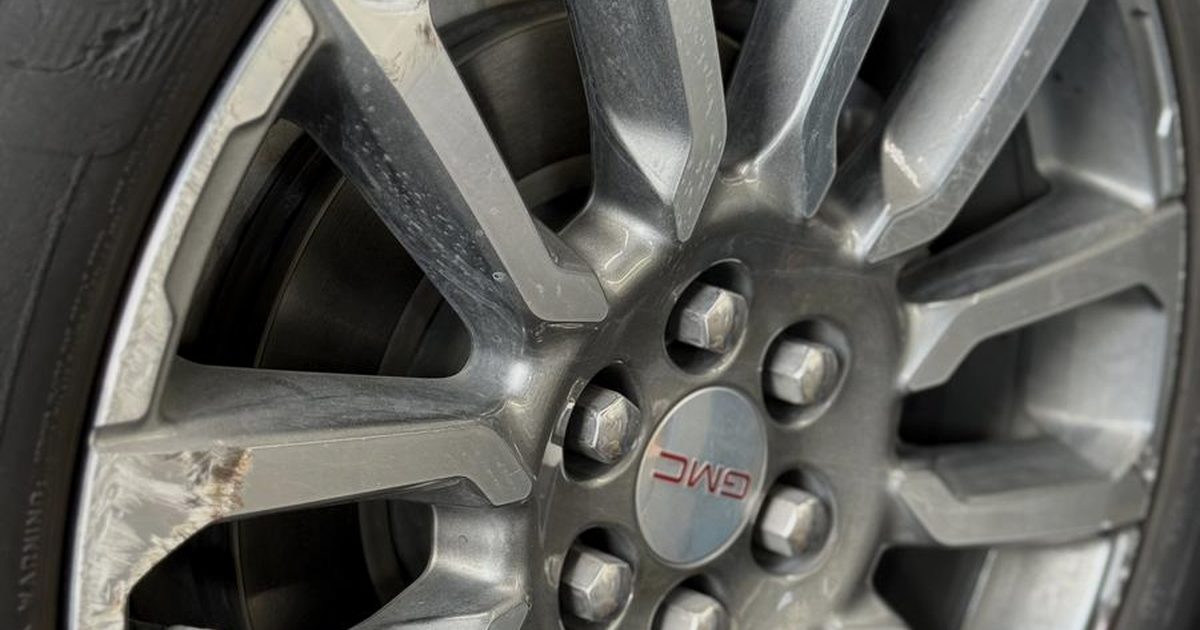
Before you book wheel repair, inspect the damage closely enough to describe what happened. A proper curb rash wheel inspection helps separate scraped finish from a bent rim, cracked metal, damaged bead area or a wheel that needs a different service altogether. You do not need specialist equipment to make a useful first assessment. You need good light, a clean wheel, a careful look at the outer lip and a few clear photographs. This guide explains what to check, what not to diagnose from appearance alone, and when to send Monaco Wheels a photo before arranging an appointment.
Why inspect curb rash before booking
Curb rash usually starts when the wheel contacts a kerb while parking or turning. The visible result may be a scrape along the outer lip, missing colour, exposed aluminium or a rough edge. That damage is often cosmetic, but the same impact can also disturb the tyre bead, bend the inner barrel or create a crack that is difficult to see from the outside.
Inspection does not replace a technician's assessment. It gives you better information before you book and helps avoid choosing the wrong repair path. A photo showing only the front face may suggest a simple curb rash repair, while a second photo of the inside of the wheel may reveal a bend that belongs with wheel straightening instead.
It also helps set realistic expectations. Scratched paint, scuffed clear coat and a damaged lip can often be discussed as cosmetic work. A crack in a structural area is a different safety concern, and it should not be treated as an ordinary scrape.
Prepare the wheel for a useful inspection
Look at the wheel when the vehicle is parked safely on level ground. If the wheel is still dirty, rinse away loose grit and allow it to dry. Do not scrub aggressively at the damaged area, because a sharp edge or loose finish may become harder to assess. A torch or the light from a phone can help, but direct daylight is usually best for seeing changes in colour and surface shape.
- Turn the steering wheel to expose the front face of a front wheel, if safe to do so.
- Remove heavy brake dust from the visible face without sanding or grinding the damage.
- Check the tyre sidewall for cuts, bulges or fresh marks from the same impact.
- Take photographs before applying touch-up paint, polish or filler.
If the tyre is losing air, the vehicle vibrates, or the steering feels different after the impact, do not treat the issue as cosmetic simply because the scrape looks small. Arrange an inspection before continuing to drive normally.
What to look for during a curb rash wheel inspection
1. The outer lip
Start at the part of the wheel that projects closest to the kerb. Run your eyes around the full circumference rather than stopping at the most obvious mark. Look for missing finish, a rough or raised edge, flattened sections and places where the shape no longer follows the rest of the wheel. A light scrape that has removed colour is different from a lip that has been folded or pushed inward.
2. The visible face and spokes
Inspect each spoke where it meets the rim. Impact marks can travel farther than the first scuff, particularly around a spoke corner or a sharp transition in the design. On painted wheels, look for flaking, lifting edges and exposed metal. On a machined or diamond-cut face, note whether the damage is limited to the surface or crosses into the contrasting cut pattern. A diamond-cut wheel repair may require a different assessment from a painted finish.
3. The inner barrel and bead area
If you can see the inside of the wheel through the spokes, look for a flat spot, a pronounced dent or a fresh scrape near the tyre bead. The inner barrel is where a bend may be more apparent than on the front face. Do not remove the tyre or attempt to straighten anything yourself. The useful question is whether the impact has changed the wheel's shape or affected the area where the tyre seals.
4. The hub, valve and tyre
Check around the valve stem and the hub opening for fresh damage, then examine the tyre sidewall and tread edge. A wheel may have cosmetic damage while the tyre has taken the more serious part of the impact. A bulge, cut, air loss or new vibration deserves attention even when the rim only shows a narrow scrape.
Cosmetic damage or a possible structural problem?
There is no reliable visual rule that confirms a wheel is safe. However, certain signs justify treating the job as more than ordinary curb rash. Use the following as a screening list, not as a home diagnosis.
- More likely cosmetic: the mark is limited to the painted, clear-coated or finished surface; the lip remains even; the tyre holds air; and there is no new vibration.
- Needs closer assessment: the lip looks flattened, the wheel has a visible dent, the tyre has lost pressure, or the vehicle now shakes at speed.
- Do not ignore: a visible crack, a split near a spoke or hub, a damaged bead seat, exposed damage extending into structural metal, or a tyre with a bulge or cut.
Do not cover a questionable area with paint before it has been assessed. A coating can hide the boundary of a crack or make a rough edge appear less serious. If the wheel is cracked in a structural area, Monaco declines to weld it and recommends replacement instead. That is a safety decision, not a sales tactic.
How to inspect the wheel step by step
- Record the starting condition. Photograph the whole side of the vehicle so the affected wheel is easy to identify. Then take a closer image of the wheel face.
- Clean only what you need to see. Remove loose dirt and brake dust, but leave bonded material or damaged finish undisturbed.
- Trace the damage. Follow the mark around the rim and across nearby spokes. Note where the finish changes, where metal is exposed and where the edge feels irregular.
- Look behind the face. Use the gaps between spokes to check the inner barrel and bead area. Rotate the wheel only if the vehicle is safely positioned and there is no reason to suspect an unsafe condition.
- Compare the shape. Compare the damaged section with the opposite side of the same wheel. A change in the circular profile or a flat section is more significant than colour loss alone.
- Check how the car behaves. Note air loss, steering pull, vibration or a new noise. These symptoms should be included when you request an assessment.
Write down when the impact occurred and whether it involved a pothole, kerb or road debris. The event does not prove what happened inside the wheel, but it gives the technician useful context when reviewing your photos.
Take photos that help a technician
A clear photo is more useful than a large number of dark or distant images. Photograph the wheel straight on, then take one from a slight angle so the depth of the scrape is visible. Include the entire rim in at least one frame and use close-ups for the worst sections. If possible, include the inner barrel through the spokes and the tyre sidewall.
Keep the lens clean and avoid using a portrait effect that blurs the edge. Natural light is preferable. Send the original images rather than screenshots, and mention whether the tyre holds air and whether the car has developed a vibration. Monaco uses wheel photos to understand whether the request sounds like cosmetic repair, refinishing, straightening or another service.
Choose the service and location carefully
For a scrape limited to the finished outer lip, the relevant starting point is usually curb rash and rim repair. Broader finish damage may fit alloy wheel repair and refinishing. A bend, vibration or inner-barrel deformation needs a closer conversation about straightening. If the wheel has a machined face, do not assume that ordinary paint repair will reproduce its original pattern.
Monaco operates from a Costa Mesa shop and with a mobile unit in Las Vegas. Costa Mesa work is by appointment and includes shop services such as straightening, powder coating and machined-face work because those jobs require equipment that stays in the shop. Las Vegas is mobile only, with cosmetic wheel repair and caliper painting performed at a home, hotel or office. There is no Las Vegas shop address to visit. If you are in the valley, see the Las Vegas mobile wheel repair information before booking.
For Orange County appointments, the Costa Mesa wheel repair page explains the shop location and operating model. Sending the same photos first can still save time, particularly when you are unsure whether the damage is cosmetic or requires shop equipment.
What affects the repair decision
Monaco does not publish fixed prices for every wheel because the work depends on the damage and finish. The relevant factors include how much of the rim is affected, whether the damage reaches beyond the surface, the wheel's finish, the number of wheels involved and whether a bend or structural concern needs assessment. The wheel repair cost guide explains those factors without pretending that a photograph can provide a final figure.
Do not compare quotes based only on the number of minutes spent at the wheel. Monaco's stated average active time for a standard curb rash repair is about eight minutes, but active hands-on time is not the same as total turnaround or the time required for a different finish. A machined face, powder coat or bent wheel follows a different process from a straightforward cosmetic scrape.
Before you book, use this checklist
- Photograph the whole wheel and each damaged section.
- Check the tyre sidewall, air pressure and inner barrel where visible.
- Note any vibration, steering change, noise or air loss.
- Do not sand, fill or paint over a possible crack.
- Tell the shop whether you are in Orange County or Las Vegas.
- Ask whether the photos suggest cosmetic repair, refinishing or shop-only work.
A careful inspection does not need to be complicated. Its purpose is to give you a clearer starting point and to make sure the repair conversation includes the parts of the wheel that are not visible from one photograph.
Ready to have it assessed? Text a clear photo of the wheel to (949) 800-8502, including a full view and close-ups of the damaged area. Monaco Wheels can advise on the next step before you book.
Common questions
Can I tell from a photo whether curb rash is only cosmetic?
A photo can show the location and extent of visible damage, but it cannot confirm that a wheel is structurally sound. Include the outer lip, inner barrel where visible, tyre sidewall and any symptoms such as air loss or vibration.
Should I drive with a wheel that has curb rash?
If the damage is a light surface scrape and the tyre holds air without vibration, it may be cosmetic, but a photo assessment is still sensible. Do not continue driving normally if you notice air loss, a tyre bulge, steering changes, vibration or a visible crack.
What is the difference between curb rash repair and wheel straightening?
Curb rash repair generally addresses damage to the visible finish or outer lip. Wheel straightening addresses a change in the wheel's shape, such as a bend or flat spot. An impact can cause both, so the inner barrel and vehicle symptoms matter.
Can Monaco repair a cracked wheel?
Monaco declines to weld cracks in structural areas and recommends replacement instead. A visible crack should not be treated as ordinary cosmetic curb rash; send clear photos and describe any air loss or vibration.
Does Monaco offer mobile wheel repair in Las Vegas?
Yes. Las Vegas service is mobile only, with cosmetic wheel repair and caliper painting performed at a home, hotel or office. Straightening, powder coating and machined-face work are Costa Mesa shop services.
Text us a photo of the wheel
Send a daylight photo for an initial assessment. Repair options and final pricing are confirmed after inspection.
Get a price for your wheels
Tell us about the damage and your location. We will explain repair options and confirm pricing after assessment.
We could not send your request. Please try again, or call (949) 800-8502.
Request received.
We will come back to you shortly. For anything urgent, call (949) 800-8502.Prefer to text a photo? (949) 800-8502